Start Here · 14 min
How to Play Palworld TCG – Setup, Turns & Damage Rules
Learn how to play Palworld TCG: set up a 50-card Main Deck and 10-card Soul Deck, follow turn order, pay costs, attack, block and resolve Damage Checks.
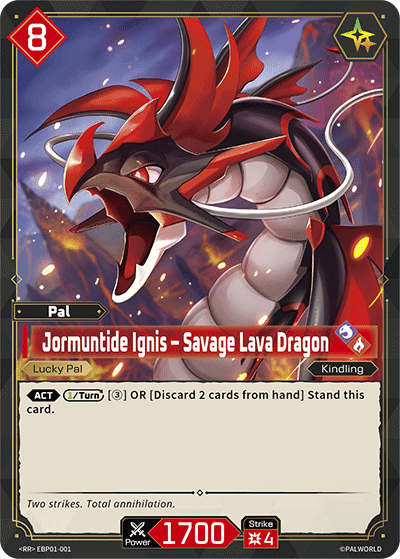

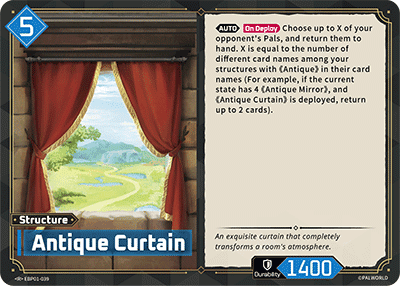
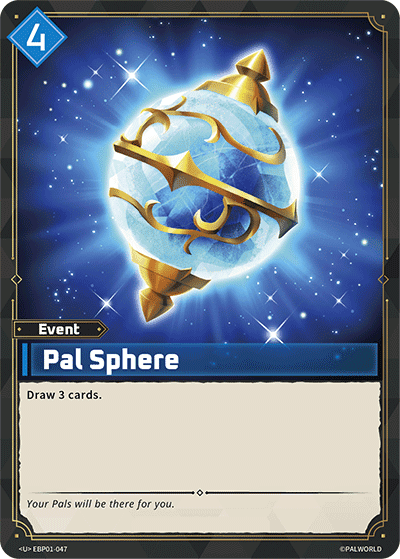
1) Use a 50-card Main Deck and separate 10-card Soul Deck; set life to 10 and draw five cards. 2) Take turns in Stand, Draw, Soul, Main and End order, resting Souls to pay costs. 3) Deploy Pals, attack and block; reduce the opponent to 0 life or empty their Main Deck to win the match.
Primary source: Official Quick Manual ↗What do you need to play the Palworld Card Game?
- Main Deck: exactly 50 Pal, Gear, Event and Structure cards.
- Soul Deck: exactly 10 Soul cards. Souls are the resource used to pay card and ability costs.
- Counters: track life, Materials and Ingredients when cards create or consume them.
- A playmat: optional for casual play, but very helpful while learning the Base, Soul Area, decks and Graveyard.
Watch the official game tutorial
This 11-minute publisher tutorial shows the table layout, turn flow, card deployment, attacks, blocking and Damage Checks. Keep the current Quick Manual nearby for exact wording and any later rules updates.
Watch a community beginner walkthrough
This independent walkthrough gives new players another explanation of the basic flow. Use it as a visual companion; the current official rules and Q&A still control every ruling.
 Community videoBy The Card GamerHow to play the PalWorld Official Card GameA second beginner-friendly look at setup, turns and playing a first match.Watch on YouTube ↗
How do you set up your first game?
- Place and shuffle your Main Deck. Place the separate Soul Deck beside your Soul Area.
- Set both life counters to 10.
- Decide who goes first. The winner of the chosen method may choose first or second.
- The player going second puts one Soul from their Soul Deck into the Soul Area in the stand state.
- Each player draws five Main Deck cards.
- Starting with the first player, each player may mulligan once. A mulligan returns all five cards, shuffles the deck, then draws five new cards; you cannot keep only some cards.
Need to build your own list first? Check the full deck-building rules, including colors, copy limits and Lucky cards.
What are the five phases of a turn?
Stand all cards in your Base and Soul Area so they can be used again.
Draw one card. The player going first skips this phase on their first turn.
Move two Souls from the Soul Deck into the Soul Area in the stand state. The Soul Area cannot exceed 10 Souls.
Play cards, activate abilities, assign Pals to Structures, attack, or rest three Souls to draw one extra card once per turn.
Damage on Pals and Structures becomes 0, end-of-turn effects finish, then pass the turn.
What each card type does
- Pals form your team. They can attack, block and work at Structures. A Pal has Power for battle and Strike for player damage.
- Structures stay in your Base and create ongoing value. Many ask you to assign a Pal by resting it.
- Gear supports Pals or provides reusable effects after deployment.
- Events resolve a one-time effect, then normally go to the Graveyard.
- Souls are kept in a separate deck and rested to pay costs.
Practice one real TD01 engine turn
This example uses current Red/Blue Trial Deck cards and their printed effects. It is a rules practice line, not a claim that it is always the best play.
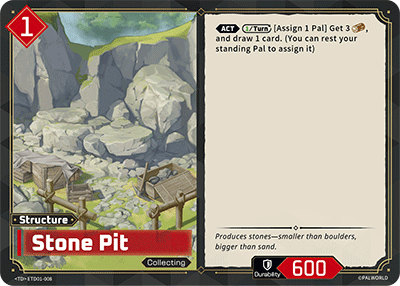
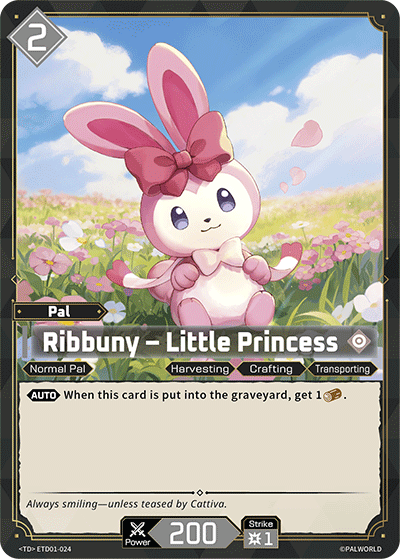
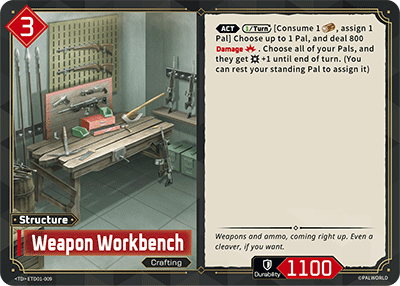
- Look for a playable hand: Stone Pit plus a cost-2 Pal gives you a concrete early plan. A hand crowded with cost-6 to cost-8 cards is a sensible full-hand mulligan.
- Spend three ready Souls: pay one to deploy Stone Pit, then two to deploy Ribbuny.
- Work the Structure: rest and assign Ribbuny to Stone Pit. Its printed ability gives you three Materials and draws one card.
- Convert the resource later: Weapon Workbench can consume one Material and assign a Pal to deal 800 damage to a Pal, then give all your Pals Strike +1 for that turn.
How do attacking, blocking and battles work?
Rest one of your standing Pals to attack. The target can be the opposing player, a Structure, or normally a Pal already in the rest state. Assault is the keyword that allows a Pal to attack standing Pals.
If a Pal attacks another Pal
Both combat Pals deal damage equal to their Power to each other. A Pal is put into the Graveyard when its damage is equal to or greater than its current Power.
If a Pal attacks a Structure
The Pal deals its Power as damage to the Structure's Durability. A Structure does not deal damage back.
If a Pal attacks the opposing player
The defending player may rest a Pal to block, changing the attack target to that blocker. The defender may also use legal Quick cards or Interrupt effects at their stated timing.
How do Damage Checks and the Lucky icon work?
If a player attack is not blocked or interrupted, put cards from the top of the defending player's Main Deck into the Graveyard one at a time, up to the attacker's Strike. If no Lucky icon appears, the defender then loses life equal to the full Strike. If a Lucky icon appears, the check stops and that life loss is cancelled.
A Pal with Strike 4 hits the opposing player. If the second checked card has a Lucky icon, those two cards remain in the Graveyard, the check stops, and the defender loses no life from that damage.
First-game mistakes to avoid
- Do not mix the 10-card Soul Deck into the Main Deck.
- Do not attack a standing opposing Pal unless your card has Assault or another effect allows it.
- Remember that the first player skips their first Draw Phase.
- Damage clears in the End Phase, but a Pal or Structure destroyed before then still goes to the Graveyard.
- Keep a possible Interrupt or Quick response in mind before spending every Soul.
Page update
What changed
The guide now links setup and turn flow to the full deck-building rules and includes both the official tutorial and an independent match walkthrough.
Update history
- Published
- Added official video instruction and a real-card opening exercise.
- Added the concise three-step first-game answer.
- Added a community beginner walkthrough that opens on the creator's YouTube channel.
- Linked the setup steps to the complete deck-building rules.
Sources and evidence
Source links
Use the official links below for current rules, card text, products and dates. Independent or community links are included only when they add clearly identified examples.